


"A household located in north London is looking for an exceptional and experienced instructor to assist their smallest child on his early path to growing into an English gentleman."
Looking at this listing, you might readily skip the phrase "first-steps" as simple a turn of phrase.
Yet, it may be the most significant aspect of this distinctive employment listing, as it aims to find a tutor for a infant.
Many of responses have since been sent in since the unnamed family published their request for the £180k-a-year tutor, who has to be "someone very special".
Over the last few weeks, the advert has attracted interest across the press, with several wondering why?
Progressive Approach
The CEO, head and founder of a global tutoring firm, which is supporting the family in their quest, stated that in spite of first skepticism, he found the idea "forward-looking", and "advanced".
When he met the family, he mentioned they appreciated the unconventional aspect of their request, and how immature their son is.
However, they explained that they "were unwilling to delay any longer" to hire a tutor, as they had postponed until their firstborn was five, and by that age "cultural bias had already become established".
What precisely did the family mean by "cultural bias"?
It's "everything", Adam replied. "How you eat, how you speak".
He explained the older sibling had adopted "really subtle, body language" from the family, and had assumed their cultural habits. The family told the consultant they did not want this pattern to happen again with their younger child.
The intention: To hire a British tutor, who should speak with standard English accent, to influence the baby from the very start.
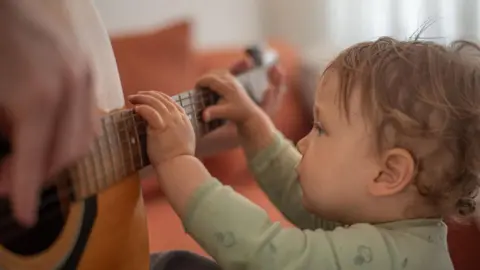
Subtle Influence
"Much of the learning at the beginning here is kind of osmotic," said the CEO.
It's via this natural absorption that the family are aiming the child will pick up the UK customs they want to impart.
The consultant said the tutor must be an individual who studied at "the appropriate educational institutions – comparable categories of schools as the family plan to send their son to".
"The educator must be the appropriate candidate, they'll be doing things they aren't even aware they're doing, effortlessly," he said.
Money No Object
The family told Adam the selected educator should ideally also have familiarity of or interest in riding, alpine skiing, artistic pursuits and instrumental training so as to inspire the child in a wide range of hobbies.
Additionally though, he said the family hoped the tutor to sign up the child on a variety of classes so the child would be "horseback riding and starting an tool by the time they are approximately three years old".
In the family's minds, guiding their son become a "UK sophisticate" will bring about achievement and provide access.
"Taking into account the pros and cons of that, because it's definitely a social class indicator," he notes.
But, in spite of all this guidance in "UK identity", could the child adopt so-called cultural leaning from the multicultural family he resides with anyway?
"Absolutely", replied he. "The parents know this might not succeed, but they've merely embraced the attitude of, 'let's give it a go and let's go as early as we can', because the price of it is not a concern," he explained.
Overly Optimistic
Several in the education sector who express these reservations.
An education leader, chief executive of Blue Education, who also offer individual instructors, stated that "the journey of becoming bicultural, or in fact, discovering oneself, is something that must be experienced personally, not engineered."
The expert noted that he had moved from China to the United Kingdom at the time of childhood, and had been educated understanding and embodying both cultures. He progressed to study at the University of Cambridge.

"The idea that a single person can function as a living vessel of Britishness, an individual who can in some way transplant the qualities of a UK sophisticate to a one-year-old child, seems to me naive and impractical," he wrote.
"Based on my background, engaging a typically British tutor from babyhood will does not instantly produce the outcome they desire.
"I did not have that kind of mentor, and nevertheless I have been lucky enough to live numerous of the experiences they desire for their son."
He added: "The truth is, personal identity should not be imposed from the outside; it must be embraced, and it must be internally driven."
Purchasing UK Culture
Of course, English culture is something the CEO thinks can be taught – and sold.
"In my view the reality that the world views us in this regard is something that we should be cherishing|valuing|appreciating


